Basement mold, when to call a professional
A black patch in a basement corner does not mean the same thing depending on what is behind it. The real subject is never the patch, it is the water feeding it and the true extent of the network inside the materials. Here is how to tell the difference.
The rough one square metre threshold
Below roughly one square metre, on a non porous surface like concrete or tile, careful cleaning by the owner is generally enough, provided you wear respiratory protection and correct the moisture source.
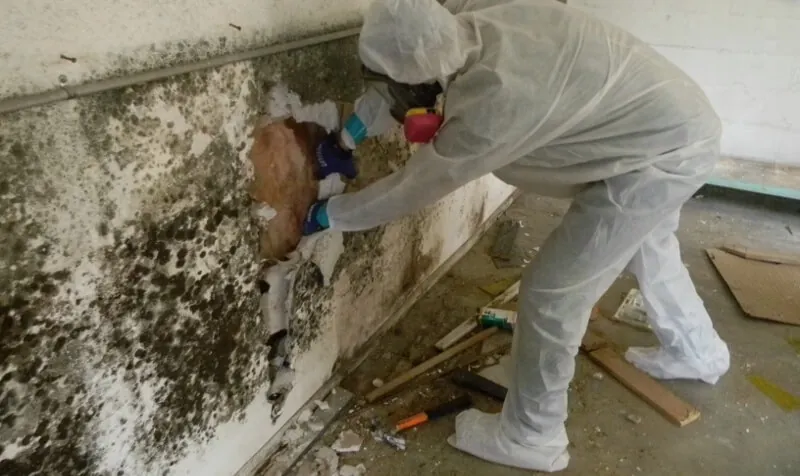
Beyond that area, or as soon as the mold reaches drywall, insulation or structural timber, professional intervention becomes necessary. The reason is not the cleaning itself, it is the risk of dispersing spores through the whole building by working without containment.
Why bleach solves nothing
On a porous surface, bleach discolours the visible part but does not destroy the network that has developed deep in the drywall or wood. The visual result is immediate and misleading.
Worse, bleach is mostly water. On already damp material it adds moisture, which can feed regrowth. On contaminated porous material the only solution is removal, not cleaning.
What hides behind a visible patch
Visible mold is almost always the smallest part of the problem. Behind a stained drywall panel you frequently find saturated insulation, an attacked bottom plate and sometimes contamination travelling up the wall cavity.
That is why a serious assessment starts with moisture readings and sometimes a thermal camera, not with a quote given from a photo.
Finding the source, the step nobody should skip
Foundation seepage, a blocked weeping tile, a sewer backup, a slow plumbing leak or simply chronic condensation from insufficient ventilation. The causes are few and they can be diagnosed.
Until the cause is corrected, even the most rigorous remediation will not hold. It is the single most important point of the whole exercise, and the one we systematically document in our report so the repair gets done.
What professional remediation includes
An initial air test to measure fungal load and document the starting condition. Containment of the zone in polyethylene under negative pressure to stop spores migrating. Full removal of contaminated porous materials. Drying with industrial dehumidifiers until moisture returns to normal. A certified antifungal treatment. Then a final air test compared against outdoor air, with results provided in writing.
That documented file is also what your insurer will ask for if you make a claim.
Frequently asked questions
It depends on the origin of the damage. Sudden accidental water damage is often covered, slow seepage known about for a long time rarely is. We provide a documented file with photos, moisture readings and test results, which is what the insurer will ask for.
Usually the day after the final air test if results are compliant. The work itself runs from two days for a partial basement to one or two weeks for extensive contamination with prolonged drying.
No, we handle the contamination and the drying. Foundation waterproofing, roof or plumbing repair belong to another trade. We identify and document the cause so the repair can be carried out.